
Published on July 20, 2026 — by Ellen Bennett, Women’s Health Researcher
Medical & Affiliate Disclosure: This article is for educational purposes only and is not medical advice. Always consult your doctor before starting any supplement. Some links are affiliate links; if you buy through them we may earn a commission at no extra cost to you.
If you have watched the FemiCore video, read a dozen “scam or legit” pages, and still cannot tell whether this bladder supplement actually does anything, you are not alone. That is exactly where I was when I started digging. So let me answer the question plainly, then show you the evidence behind the answer, ingredient by ingredient, without the hype the sales pages lean on.
Quick Answer: Does FemiCore really work? For the right woman, it is a well-built bet. Its lead ingredients have real research behind them for urinary tract health: a 2023 Cochrane review found cranberry cut recurrent UTIs by about 26%, and Lactobacillus crispatus is the strain with the best track record. Users who stick with it 4+ weeks commonly report calmer urgency and fewer nighttime trips, gradual rather than dramatic. It fits best if urgency, nighttime trips, or repeat UTIs are part of your picture; for leaks only on a cough or sneeze, pelvic floor training comes first.
The Verdict in 20 Seconds
- Works best for: women 40+ with urgency, nighttime trips, or recurrent UTIs, especially since menopause.
- Strongest ingredient: cranberry standardized to 30% PACs (Cochrane 2023: about 26% fewer repeat UTIs).
- Timeline: gradual, usually noticeable between weeks 2 and 8.
- Best first order: the 3-bottle package, about $2.30 a day, free shipping.
- Risk: low, thanks to a 60-day money-back guarantee on the official site.
Try it with a 60-day money-back guarantee
What FemiCore Claims to Do
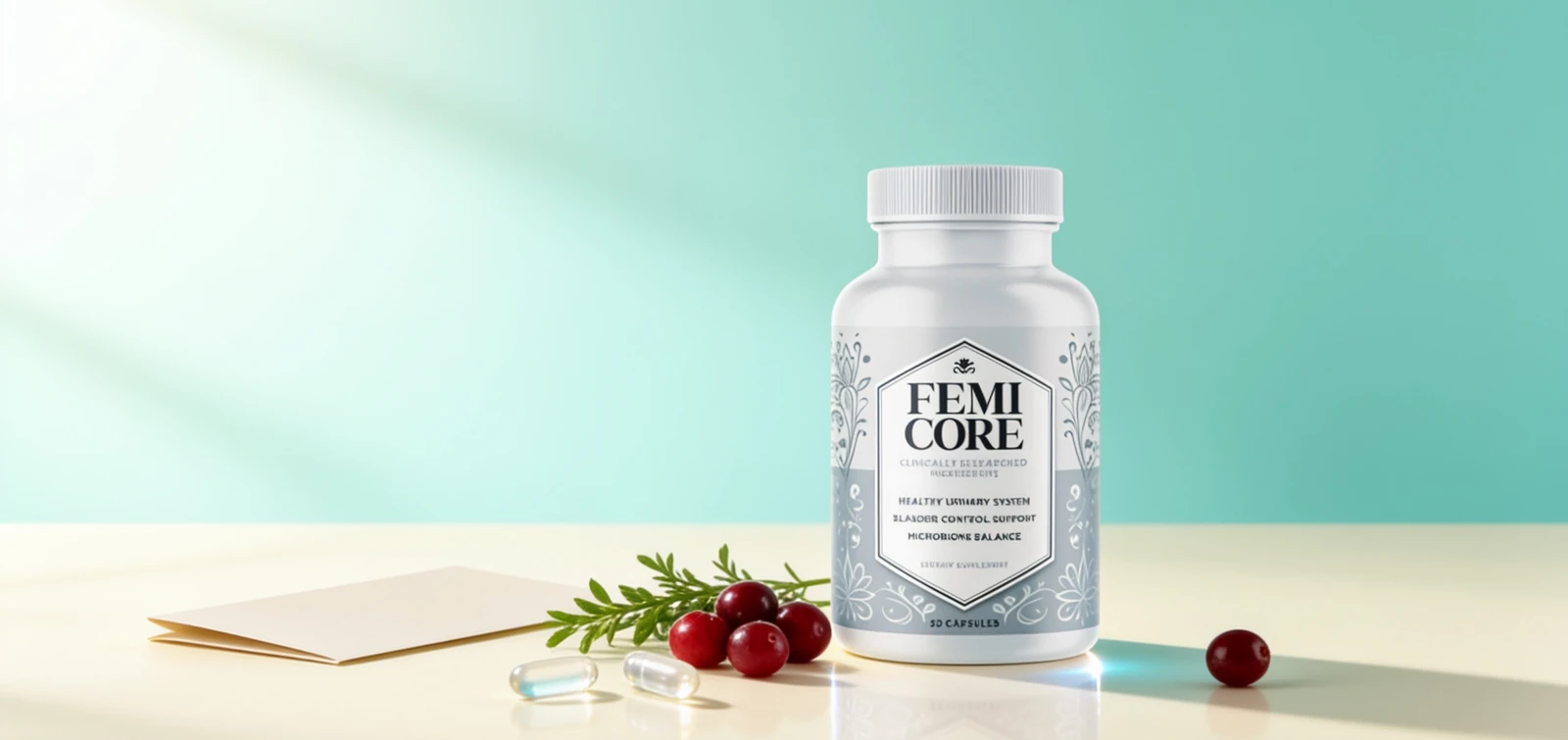
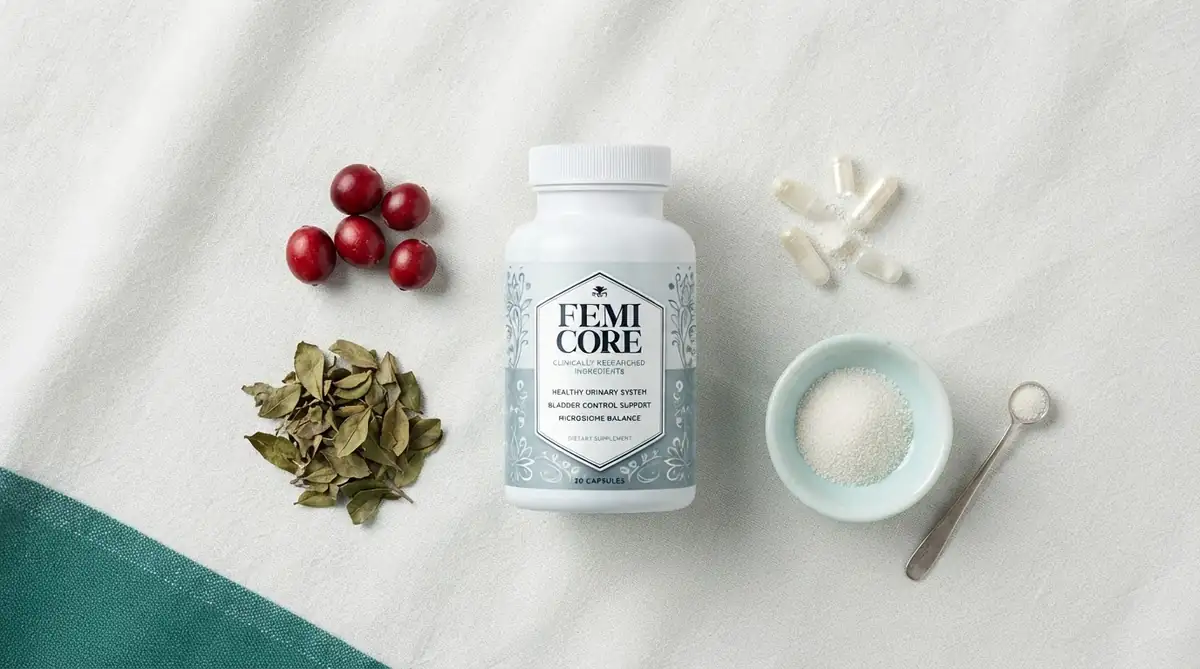
FemiCore is marketed as a once-daily capsule that supports bladder control and a balanced urinary microbiome in women. The formula pairs a botanical blend — cranberry (standardized to 30% proanthocyanidins), bearberry (uva ursi), berberine, and Mimosa pudica — with five strains of Lactobacillus (crispatus, acidophilus, plantarum, gasseri, and casei).
The premise is reasonable on paper: the female urinary tract has its own microbial community, and a healthy one leans heavily on Lactobacillus. What the research supports is the microbiome side of the story: repeat infections and the urgency and nighttime trips that often come with them, a pattern that becomes common after menopause as protective Lactobacillus declines. For the full breakdown of the formula and pricing, I keep an updated honest FemiCore review.
Does FemiCore Really Work? The Honest Answer
The honest answer is “yes, when it is aimed at the right target.” FemiCore works best as support for urinary tract health, where its two lead ingredients have real clinical backing, and that is exactly the problem behind a lot of the urgency and nighttime trips women notice after 40. Where it is not the main tool is purely mechanical leakage on a cough or sneeze. Anyone promising it will stop every kind of leak in a week is selling you the video, not the science.
Here is the reframe that helps: a supplement can only “work” if it is aimed at the right target. So before deciding whether FemiCore is worth it, figure out which problem you actually have. If you are not sure, my guide on stress vs. urge incontinence walks you through it in a couple of minutes.
The Evidence, Ingredient by Ingredient
This is where most “does it work” pages fall apart — they list ingredients and wave at “studies” without naming a single one. Let’s actually look.
Cranberry (30% proanthocyanidins)
This is FemiCore’s most defensible ingredient. A 2023 Cochrane review of more than 50 trials found that cranberry products reduced the risk of repeat UTIs by roughly 26% in women with recurrent infections. The active compounds, proanthocyanidins (PACs), appear to stop E. coli from sticking to the bladder wall. Note the target: this is about infection, not leakage. It is genuine support for one specific problem. I dug into the nuance in whether cranberry really works for UTIs.
Lactobacillus crispatus and the probiotic strains
L. crispatus is the standout of the five strains. A well-known 2011 randomized trial (Stapleton et al., published in Clinical Infectious Diseases) found that an intravaginal L. crispatus probiotic reduced recurrent UTIs. One honest nuance: that study used a vaginal application, and the research on oral capsules is younger. FemiCore still chose the right headline strain, which many “bladder probiotics” never even name. I cover this more in probiotics for bladder control.
FemiCore — Our #1 Rated Bladder Health Supplement
Microbiome-targeted formula · 60-day money-back guarantee · GMP-certified facility
Bearberry (uva ursi)
Bearberry contains arbutin, which has traditional use as a urinary antiseptic and some short-term data for uncomplicated UTIs. But it is not meant for long-term daily use — high or prolonged doses raise safety concerns because of its hydroquinone content. In a daily formula it sits inside a small 350 mg four-herb blend, so the amount is likely modest, but if you take prescription medication it is worth mentioning to your pharmacist. That concern, and the rest of the label, is covered in what FemiCore side effects are actually plausible.
Berberine and Mimosa pudica
Berberine has real research — for blood sugar and cholesterol, not bladder control. Its role here is more about broad “antimicrobial” positioning than any leakage-specific evidence, and it can interact with medications. Mimosa pudica is used traditionally, mostly as a gut/antiparasitic herb, with essentially no modern human data for urinary health. In plain terms: the cranberry and the probiotic strains are the engine of this formula; these two are supporting ingredients.
Ingredient Evidence at a Glance
| Ingredient | Best-supported use | Evidence strength |
|---|---|---|
| Cranberry (30% PAC) | Reducing recurrent UTIs | Moderate (Cochrane 2023) |
| L. crispatus | Healthy urinary microbiome | Promising, mostly vaginal delivery |
| Other Lactobacillus strains | General microbiome balance | Limited for urinary tract |
| Bearberry (uva ursi) | Short-term UTI relief | Limited; not for long-term daily use |
| Berberine | Blood sugar / metabolic (not bladder) | Off-target for this use |
| Mimosa pudica | Traditional gut herb | Little to no urinary evidence |
The Dose Question That Decides the Answer
Every ingredient section above asks whether the compound works. There is a prior question that decides all of them: is there enough of it in the capsule to do anything?
For cranberry there is now a specific number. A 2024 meta-analysis in Frontiers in Nutrition pooled 10 randomized controlled trials and found cranberry reduced UTI risk by 18% only when daily proanthocyanidin intake reached at least 36 mg (RR 0.82, 95% CI 0.69 to 0.98). Below that threshold the effect was not statistically significant, and the benefit appeared when products were used for 12 to 24 weeks (PubMed 39668896).
Now hold that against the label. FemiCore, also written femi core, discloses a 350 mg herbal blend without breaking out the individual amounts. Its cranberry is standardized to 30% proanthocyanidins, so hitting 36 mg of PACs takes roughly 120 mg of extract, about a third of a blend shared with three other herbs.
Which means the honest answer to “does it work” has a layer most pages skip:
- The ingredient has evidence at an adequate dose, in women, for UTI prevention specifically.
- Whether this product delivers that dose is unknowable from the label. It might. It might not. Nobody reviewing it can tell you, because the split is not published.
- The probiotic side is measured in the wrong unit entirely. Live cultures are counted in CFU, not milligrams, so “50 mg of five strains” tells you the weight of powder and nothing about how many organisms are alive when you swallow it.
Proprietary blends are the norm across this whole category, and FemiCore discloses more than most: a standardized cranberry and five named strains. The practical answer to an undisclosed dose is not to guess but to test it on yourself, with a guarantee behind you.
That is also why the package choice matters. The cranberry evidence built over 12 to 24 weeks, so the 3-bottle package (90 days of product) gives the formula a fair run while still letting you decide inside the 60-day refund window, using your own diary. We lay that plan out in the full review.
UTI vs. Bladder Leaks: What FemiCore Actually Helps
This is the most useful thing to understand before you order. A urinary tract infection is a bacterial infection — it needs a doctor, and often antibiotics. Bladder leakage (incontinence) is a control problem, usually tied to the pelvic floor, hormones, or bladder muscle behavior. They are not the same, and they do not respond to the same things.
FemiCore’s evidence sits on the UTI and microbiome side. So if recurring infections, urgency, or nighttime trips are part of your picture, the formula is aimed squarely at your problem. If you leak only when you cough or laugh, pelvic floor training does the heavy lifting, and many women with mixed symptoms do both: training for the muscle side, FemiCore for the microbiome side. My complete guide to bladder leaks lays out what actually moves the needle.
What Real Users Say
I read through forum threads and reviews rather than the polished testimonials on the sales page, and a consistent pattern showed up. Women who used FemiCore for four weeks or longer commonly reported calmer urgency, fewer nighttime bathroom trips, and better sleep — real but gradual changes. Some noticed no difference and used the refund window, which is exactly what the guarantee is for, and a few mentioned mild digestive adjustment in the first week.
One thing to treat with suspicion: several third-party pages quote exact “4.96 out of 5 from 19,263 reviews” style figures with named, aged, city-tagged reviewers that cannot be traced to any verifiable source — a hallmark of template or AI-generated supplement content. I broke down that pattern in FemiCore reviews and complaints. You will see the identical pattern on competing brands, something I document in my comparison with pHemmePure.
How Long Until You Know If It’s Working?
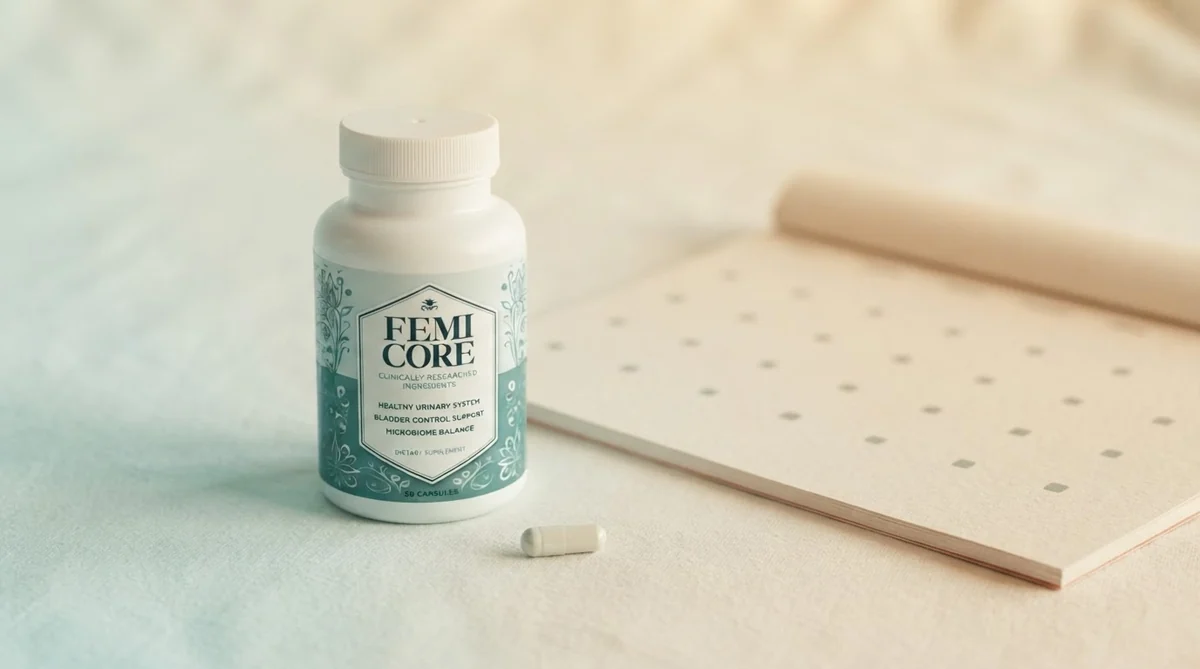
If FemiCore is going to help you, expect a gradual shift over roughly two to eight weeks of consistent daily use — not overnight. The most honest way to judge it is to keep a simple bladder diary before you start and again at week four: nighttime trips, urgency episodes, and any leaks. If nothing has budged by the end of the 60-day guarantee window, that is your answer, and you can request a refund.
Want to trial it with the guarantee as your safety net?
60-day money-back guarantee · Official site only · No auto-ship traps
Prefer to make sure you are buying the genuine product and not an Amazon look-alike? Here is where to buy FemiCore safely.
Who FemiCore Might Help — and Who Should Skip It
It is a strong fit if you: get recurrent UTIs and want a daily support alongside your doctor’s plan; noticed more urgency or nighttime trips around perimenopause or menopause; want to support your urinary microbiome; and like the safety net of a 60-day guarantee.
Check first or start elsewhere if you: only leak on a cough or sneeze (pelvic floor training comes first); take blood-thinners or diabetes medication (ask your pharmacist first); are pregnant or breastfeeding; or need results within days. If you want to compare options first, see our roundup of the best bladder control supplements and our FemiCore vs. FemiPro comparison.
My Honest Take
Does FemiCore really work? For the woman it is built for, one with urgency, nighttime trips, or UTIs that keep coming back, it is an evidence-informed choice built around the two ingredients with the best research in this category, cranberry and L. crispatus, and it is the formula I would trial first. Order the 3-bottle package, keep a simple diary, pair it with pelvic floor work if you also leak on exertion, and decide inside the 60-day window. If it does not earn its place, you ask for your money back.
Key Takeaways
- Best fit: women 40+ with urgency, nighttime trips, or recurrent UTIs.
- Cranberry is the standout — a 2023 Cochrane review found ~26% fewer recurrent UTIs.
- The right probiotic strain: L. crispatus, the one with the best track record.
- Give it 2–8 weeks and track a bladder diary; the 3-bottle package covers a fair trial.
- Check interactions if you take blood-thinners or diabetes medication.
- Pair it with pelvic floor training if you also leak on a cough or sneeze.
Ready to try FemiCore with the 60-day guarantee?
Once-daily formula · Made in USA, GMP-certified · Risk-free trial window
Frequently Asked Questions
Does FemiCore really work for bladder leaks?
It depends on the kind of leak. For leaks that come with urgency, frequent trips, and repeat infections, FemiCore’s microbiome formula is the relevant approach, backed by strong cranberry evidence for recurrent UTIs. For leaks that happen only on a cough, sneeze, or lift, pelvic floor training is the main fix, and many women use both.
How long does FemiCore take to work?
Expect gradual changes over about two to eight weeks of daily use, not overnight results. Tracking a simple bladder diary before and at week four is the most honest way to judge whether it is helping you.
Is FemiCore a scam?
The product itself is a real supplement with some evidence-based ingredients. The bigger red flags are in the marketing — untraceable review counts and “cure” language. Buy from the official site, keep the guarantee in mind, and judge it by your own results.
Is FemiCore safe to take every day?
Most healthy adults tolerate it, but bearberry is not ideal for long-term daily use, and berberine and cranberry can interact with medications. If you take blood-thinners or diabetes drugs, are pregnant, or are breastfeeding, talk to your doctor or pharmacist first.
Can FemiCore replace my bladder medication?
No. FemiCore is a dietary supplement, not a drug, and it is not intended to diagnose, treat, cure, or prevent any condition. Never stop a prescribed medication without talking to the doctor who prescribed it.
Where should I buy FemiCore?
Buy through the official site to get the genuine formula and the 60-day guarantee, and to avoid the differently formulated Amazon look-alikes. See our guide on where to buy FemiCore safely.
The Bottom Line
FemiCore is neither a miracle nor a scam. It is a well-built, microbiome-focused supplement whose real strength is urinary tract support, which is exactly what sits behind a lot of the urgency and nighttime trips that start after 40. Used alongside good habits and backed by a 60-day guarantee, it is a low-risk trial worth taking. Judge it by your own diary, not by anyone’s video.
— Ellen Bennett
Last Reviewed: September 2026 by Ellen Bennett, Women’s Health Researcher. Sources: Cochrane, NIDDK, NIH/PMC, FDA, Urology Care Foundation.

Ellen compiles evidence from NIH, NIDDK, ACOG, Cochrane, and the Urology Care Foundation to help women make calm, informed bladder-health decisions. More about Ellen →