
Published on June 15, 2026 — by Ellen Bennett, Women’s Health Researcher
Medical & Affiliate Disclosure: This article is for educational purposes only and is not medical advice. Always talk to your doctor about urinary symptoms, especially if you notice pain, fever, or blood in your urine. Some links below are affiliate links; if you buy through them we may earn a commission at no extra cost to you. That does not change what we write — you will see the gaps in the evidence laid out plainly.
Independent supplement research · Written and fact-checked by Ellen Bennett, Women’s Health Researcher · Last verified: September 7, 2026
In my late forties I woke up twice a night for the better part of a year, and I planned every long drive around the next rest stop. So when a bladder supplement promises “control,” I read the pitch the way you probably do: hoping it is true, and bracing for it not to be.
If you have been comparing bladder supplements, you have probably run into FemiCore, and a wall of near-identical “reviews” all shouting that it is either a miracle or a scam. This FemiCore review takes a slower, more honest route. We will look at what is actually in the bottle, what the research on those ingredients really shows, and, just as important — what it does not show. By the end you will know whether FemiCore fits your situation, and exactly how to trial it without putting your money at risk.
A quick word on why this matters. Bladder problems sit squarely in the category of health topics where bad information does real harm: you can waste months and a few hundred dollars chasing the wrong fix while the actual cause goes untreated. So instead of parroting the sales page, this review lines the marketing claims up against the published research, names the studies and their dates, and tells you where the evidence is strong, thin, or missing entirely.
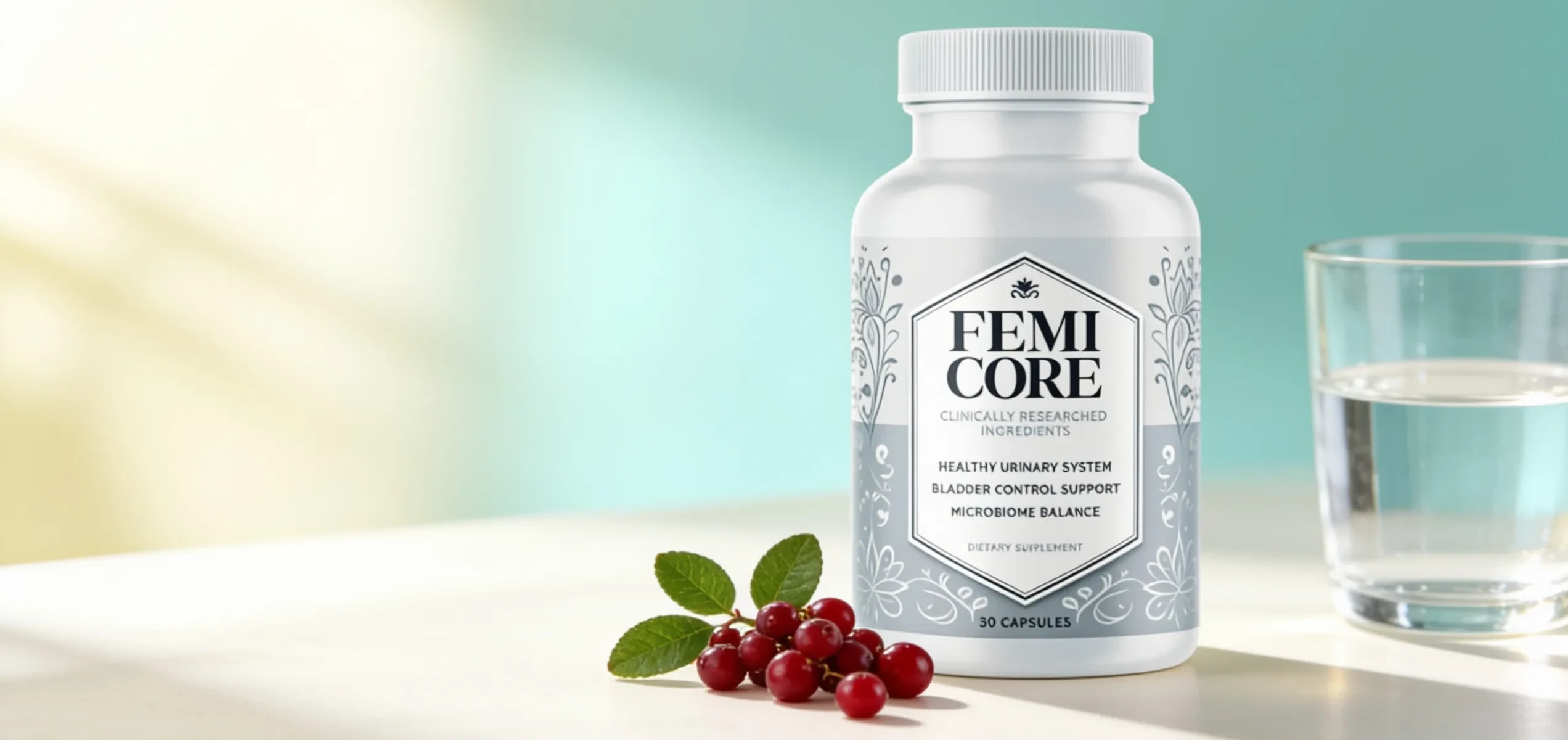
Quick Answer: FemiCore is a once-daily women’s bladder support supplement that pairs a 350 mg herbal blend (cranberry, bearberry, Mimosa pudica, berberine) with a 50 mg five-strain Lactobacillus probiotic. Who is it for? Women over 40 whose bladder has changed: more urgency, more nighttime trips, UTIs that keep coming back, often starting around menopause. That is the pattern its microbiome formula is built around, and its lead ingredient has real evidence: a 2023 Cochrane review of 50 trials found cranberry cut recurrent UTI risk by about 26% in women. One honest caveat: if your only issue is leaking when you cough or sneeze, pelvic floor training should come first. The 60-day money-back guarantee makes a trial low-risk either way.
What this score measures: the quality of the published evidence behind the ingredients, how much the label actually discloses, the refund terms, and value for the money. It is not a prediction of how well FemiCore will work for you, because no reviewer can honestly claim to know that.
Scored across six categories below, with the arithmetic shown.
The Quick Verdict
- Best for: women 40+ with urgency, nighttime trips, or UTIs that keep coming back, especially if it started around menopause.
- Not the first step if: you only leak when you cough, sneeze, or lift (start with pelvic floor training).
- Why it stands out: cranberry standardized to 30% PACs, five named Lactobacillus strains including L. crispatus, one capsule a day.
- Best first order: the 3-bottle package, about $2.30 a day with free shipping, 90 days of product.
- Your safety net: 60-day money-back guarantee, processed by ClickBank, valid only on the official site.
What this review covers
- How I reviewed FemiCore
- The score, broken down
- What type of bladder problem it suits
- What FemiCore is, exactly
- Ingredients, and what the evidence says
- The proprietary blend problem
- Claimed benefits vs realistic expectations
- The menopause factor
- How it compares to the four rivals
- Pros and cons
- Side effects and interactions
- What real users actually report
- Pricing, cost per day, and packages
- The 60-day money-back guarantee
- Who it suits, and who should skip it
- How to trial it the smart way
- What this review does not know
- My honest verdict
- Frequently asked questions
FemiCore — Our #1 Rated Bladder Health Supplement
Microbiome-targeted formula · 60-day money-back guarantee · GMP-certified facility
How I Reviewed FemiCore
In one line: every claim in this review is checked against the published label, the official checkout, the ClickBank refund terms, and the peer-reviewed literature on each ingredient. Everything below can be checked by you.
That matters because much of what ranks for this product quotes a precise cranberry dose the manufacturer has never published, or star ratings attributed to thousands of buyers with no source attached. So here is exactly what this review is built on.
- The published label. Ingredient names, the 350 mg herbal blend total, the 50 mg probiotic blend total, and the serving size. Where the label stops disclosing, I say so instead of guessing.
- The official sales and checkout pages. Package prices, shipping charges, bonus items, and the refund wording, all read on the dates stated in this article.
- The peer-reviewed literature for each ingredient. Cochrane reviews, randomized controlled trials, and meta-analyses, named and dated in the text so you can open them yourself. Where the trial used a different delivery method or a different population than FemiCore’s buyer, I flag it.
- The refund terms as written by the retailer, not as paraphrased by the sales page.
No before-and-after photos, no bottle sent by the manufacturer, no paid placement. Where the honest answer is “the data does not exist,” that is the answer you will get, and I list those gaps in what this review does not know.
The Score, Broken Down
A single number is easy to fake, so here is the arithmetic behind the 4.3. Six categories, each scored out of 5, averaged with no weighting. Nothing in the score reflects the affiliate commission, and you can see precisely where the product loses points.
| Category | Score | Why |
|---|---|---|
| Ingredient evidence | 4.9 / 5 | Cranberry standardized to 30% PACs and L. crispatus are the two components in this category with genuine randomized-trial support, including a 2023 Cochrane review of 50 trials. |
| Guarantee and refund terms | 4.7 / 5 | 60 days, processed by ClickBank rather than the brand itself, which in practice makes refunds easier to get. Loses a fraction because 60 days is shorter than the 12 to 24 week window where cranberry showed its effect. |
| Format and ease of daily use | 4.8 / 5 | One capsule a day, no stimulants, no timing rules, nothing to mix. The easiest kind of supplement to actually stay consistent with. |
| Label and dose transparency | 3.0 / 5 | The single weakest point. Two blend totals are published, the per-ingredient split is not, and the probiotic is listed in milligrams rather than CFU. You cannot verify the cranberry dose against the trials. |
| Price and value | 3.8 / 5 | Between $1.63 and $2.80 per day depending on the package. Reasonable for a multi-ingredient formula, well above a plain standardized cranberry capsule. |
| Company and manufacturing transparency | 4.6 / 5 | GMP-certified, FDA-registered facility, a named retailer handling billing and refunds, and a real refund policy in writing. Sold through one online funnel only, with no retail presence to cross-check. |
The arithmetic: (4.9 + 4.7 + 4.8 + 3.0 + 3.8 + 4.6) ÷ 6 = 25.8 ÷ 6 = 4.3 out of 5.
Read the shape of that, not just the average. FemiCore scores high on the things that matter most and can be checked from the outside: ingredients with real research behind them, a refund policy in writing, a certified manufacturing standard, and a format you will actually stick with. Its one soft spot, per-ingredient doses, is shared by nearly every formula in this category, and it is exactly what a tracked 60-day trial answers for you personally.
What Type of Bladder Problem Is FemiCore Best For?
Know before you buy: FemiCore is built for the bladder that changes after 40: urgency, frequent nighttime trips, and recurrent UTIs, often tied to a shift in the bacteria of the urinary tract. Matching the right tool to the right problem is what turns a trial into a result.
Not all bladder problems are the same, and the type you have shapes what FemiCore can realistically do for you. There are three patterns, and most women over 50 have more than one.
- Stress incontinence — leaking when pressure spikes: a cough, sneeze, laugh, heavy lift, or run. The cause is a pelvic floor that is not closing the urethra fast enough under load. This is a mechanical problem. Evidence-backed approaches are pelvic floor muscle training (Kegels and the Knack technique) and, in severe cases, surgery or a pessary.
- Urge incontinence (overactive bladder) — a sudden, intense urge followed by leaking before you reach the bathroom. In women who experience recurrent UTIs, chronic low-grade bacterial irritation can make the bladder hypersensitive and trigger urgency. When the urge component is infection-related, FemiCore’s cranberry-and-probiotic approach becomes more directly applicable.
- Mixed incontinence — the most common type in women over 50: a combination of stress and urge symptoms. Pelvic floor work targets the stress component; microbiome support may help the infection-related urgency piece.
Picture a typical case: a 54-year-old who never thought about her bladder until perimenopause, now up twice a night, mapping every errand around a restroom, and on her third UTI in a year. She does not have a pelvic floor problem alone; she has the urgency-and-infection pattern this formula is built around. That is the woman this review is really for.
So the useful question is not “stress or urge?” but “are urgency, nighttime trips, or repeat UTIs part of my picture?” If they are, the research behind FemiCore’s formula is directly relevant to you. If your leaks happen purely on exertion and you have never had a UTI, start with pelvic floor training. Not sure which type you are dealing with? Our guide on stress vs. urge incontinence walks you through how to tell the difference.
What Is FemiCore, Exactly?
In short: FemiCore is a once-daily capsule marketed for women’s urinary and bladder health. It combines a 350 mg herbal blend with 50 mg of five Lactobacillus probiotic strains. The idea is to support a healthy urinary microbiome, the community of bacteria in the urinary tract — rather than to act like a drug.
FemiCore is sold by a single company through an online video funnel, not in pharmacies. It is made in the USA in a facility the company describes as FDA-registered and GMP-certified, and it is labeled non-GMO with no stimulants. You take one capsule a day.
To understand the pitch, it helps to know what the “urinary microbiome” actually is. For decades, doctors assumed urine was sterile. Research over the last fifteen years has overturned that: the bladder and urinary tract host their own community of bacteria, and in healthy women that community tends to be dominated by Lactobacillus species. These bacteria produce lactic acid and other compounds that make it harder for troublemakers like E. coli, the cause of most UTIs — to take hold.
FemiCore’s logic follows from that: top up the friendly Lactobacillus strains, add plant compounds like cranberry that make the bladder wall less hospitable to bacteria, and you give the urinary tract a better chance to defend itself. It is a reasonable theory. The open question, the one most FemiCore reviews skip — is whether a once-daily oral capsule actually delivers enough of the right bacteria to the right place to matter. That is what the next section digs into.
FemiCore Ingredients, and What the Evidence Actually Says
The honest version: FemiCore’s ingredients have real research behind them, mostly for urinary tract infections, which matters because repeat low-grade infections and irritation are a common hidden driver of urgency and nighttime trips in women over 40. The cranberry and probiotic story is the strongest. The rest leans on tradition and indirect data.

Cranberry (standardized to 30% proanthocyanidins)
This is the ingredient with the best evidence, and the standardization detail matters. Cranberry’s active compounds are proanthocyanidins (PACs), which appear to stop E. coli bacteria from sticking to the cells lining the bladder. If the bacteria cannot adhere, they get flushed out before they can cause an infection. The “30% PAC” label means the extract is concentrated for that compound rather than being watered-down juice powder, a genuine plus, since many cheap cranberry products are too weak to do anything.
The 2023 Cochrane review is the gold-standard source here. It pooled 50 randomized controlled trials with 8,857 participants and found that cranberry products reduced the risk of repeat UTIs by about 26% in women with recurrent infections. That is a real, meaningful result. But read the fine print: the benefit was for infections, not leaking, and the same review found no clear benefit in elderly adults, people with bladder-emptying problems, or pregnant women. So cranberry earns its place in FemiCore, for the UTI-prone, not for everyone with a bladder complaint.
Lactobacillus probiotic blend (5 strains, including L. crispatus)
The microbiome angle has some support, and FemiCore picked the right headliner strain. In a 2011 placebo-controlled trial published in Clinical Infectious Diseases, UTI-prone women given a Lactobacillus crispatus probiotic had a UTI recurrence rate of about 15%, against 27% on placebo. It was a small trial and the overall difference did not reach statistical significance, but women who became well colonized with the strain had far fewer infections.
One honest nuance: that study delivered the probiotic as an intravaginal suppository, while FemiCore is a swallowed capsule, and the research on oral delivery is younger and thinner. Oral probiotics can still shift the broader microbiome, and FemiCore at least chose the strain with the best track record, which matters more than most buyers realize: many “bladder probiotics” never name their strains at all. If you want the full picture of what oral probiotics can and cannot do for your bladder, we dig into the evidence in our guide to probiotics for bladder control.
Bearberry / uva ursi
Uva ursi has a long traditional use for urinary complaints, and lab studies suggest its compound arbutin has antibacterial activity in the urinary tract. But solid human trials are thin, and there is a real safety wrinkle: it contains hydroquinone, which is why herbalists and pharmacists limit it to short-term use, typically no more than a week or two at a time. As a daily, long-term ingredient, the research picture is incomplete, so if you take prescription medication, it is the one worth mentioning to your pharmacist.
Berberine and Mimosa pudica
Berberine has interesting human data, for blood sugar control and gut health. Very little of it is urological, so its presence here is an extrapolation: a “good for you generally” ingredient rather than one chosen for bladder evidence. Mimosa pudica is used in traditional medicine and shows up mostly in animal or test-tube research, not in human bladder trials. Neither is a reason to buy FemiCore on its own, and you should be skeptical of any marketing that implies they are proven bladder fixers.
One transparency note that affects all of the above: FemiCore lists its ingredients, but the exact dose of each item inside the 350 mg herbal blend is not fully broken out. That makes it impossible to check whether the cranberry dose, for example, matches the amount used in the Cochrane trials. For a deeper look at the single most-studied ingredient here, see our breakdown of cranberry for UTI and whether it really works. I go through every ingredient in the full FemiCore ingredients breakdown.
Cranberry at 30% PACs + five named probiotic strains, one capsule a day
The Proprietary Blend Problem: What the Label Will Not Tell You
Every bladder formula in this category asks you to trust its doses, and this is where FemiCore holds up better than most: it standardizes its cranberry and names its probiotic strains, which several rivals do not. Here is what the label does tell you, what it leaves out, and how to handle the gap.
FemiCore, which you will also see written as two words, femi core, discloses two totals: a 350 mg herbal blend and a 50 mg probiotic blend. What it does not disclose is how those totals are divided. Four herbs share the 350 mg, and you are not told the split.
That matters more than it sounds, because for cranberry there is now a specific number to hit. A 2024 meta-analysis in Frontiers in Nutrition pooled 10 randomized controlled trials and found that cranberry products reduced UTI risk by 18% only when daily proanthocyanidin intake reached at least 36 mg (RR 0.82, 95% CI 0.69 to 0.98). Below that threshold, the effect was not statistically significant (PubMed 39668896). The same analysis found the benefit showed up when the product was used for 12 to 24 weeks. That number is also what separates FemiCore from the brands that never state it, which I demonstrate in FemiCore vs Bladder Relief 911.
So run the arithmetic with me. The cranberry extract is standardized to 30% proanthocyanidins. To deliver 36 mg of PACs, you need roughly 120 mg of that extract. That is about a third of the entire 350 mg herbal blend, which cranberry shares with mimosa pudica, bearberry, and berberine. It is entirely possible that FemiCore clears the threshold. It is also possible that it does not. From the published label, you cannot tell. Neither can I, and any reviewer who states the cranberry dose with confidence is telling you something the manufacturer has not disclosed.
The probiotic side has a different version of the same problem, and it is arguably worse. Probiotics are measured in colony forming units, not milligrams, because what matters is how many live organisms survive to do something. A “50 mg blend” of five strains tells you the weight of the powder and nothing about the CFU count. Two products with identical 50 mg labels can differ by orders of magnitude in live cultures.
| What you want to know | What the label gives you |
|---|---|
| Does the cranberry reach 36 mg PACs per day? | Only a 350 mg total shared across four herbs |
| How many live cultures per capsule (CFU)? | A 50 mg weight, which is not a CFU count |
| How much bearberry, given its short-use caution? | Not disclosed |
| How much berberine, given its drug interactions? | Not disclosed |
Two things keep this fair. First, proprietary blends are the norm across this entire category, not a FemiCore invention, and companies use them partly to stop competitors copying a formula. Second, undisclosed does not mean underdosed. This is a gap in what you can verify, not proof that the product is weak.
What it changes is how you should run a trial: let your own results answer the question the label cannot. The cranberry research saw its effect over 12 to 24 weeks, so the practical setup is the 3-bottle package (90 days of product) with a simple symptom diary, and a decision made inside the 60-day refund window. I lay out that plan step by step in how to trial it the smart way. Our guide to FemiCore side effects and interactions goes deeper on the components where the undisclosed amount matters most.
Claimed Benefits vs. Realistic Expectations: What Can FemiCore Really Do?
Reality check: The sales page talks about bladder “control.” Translated into what the research supports, that means support for a healthy urinary microbiome, using ingredients studied in women with repeat infections, which for many women over 40 is what sits behind the urgency and the nighttime trips. It does not mean a stronger pelvic floor muscle.
Knowing which half of the problem you are solving is what makes a trial worth it. Leaking when pressure spikes from a cough, sneeze, or lift is mechanical: the pelvic floor is not closing the urethra fast enough, and that is training territory. Urgency, frequency, and infections that keep returning are where the urinary microbiome comes in, and that is where FemiCore’s ingredients have their evidence. Many women deal with both, which is why the smart plan below pairs the two.
| Marketing Claim | Realistic Take |
|---|---|
| “Stops embarrassing bladder leaks” | Most relevant to leaks that come with urgency and irritation. For leaks on a cough or sneeze alone, pelvic floor training does the heavy lifting. |
| “Supports a healthy urinary microbiome” | Plausible and on-trend. Probiotic strain has trial support, but via intravaginal delivery, not oral capsule. |
| “Fewer trips to the bathroom” | Some users report this. May reflect fewer low-grade infections rather than a direct effect on an overactive bladder. |
| “Natural UTI defense” | The cranberry component has real Cochrane-backed support for recurrent UTIs, the strongest claim here. |
| “Works fast” | Reviewers commonly mention nothing in bottle one, with changes, if any — by bottle two. Plan on weeks, not days. |
Not sure which kind of leaking you have? Our guide to the difference between stress and urge incontinence takes about five minutes and will tell you which half of the plan matters most for you.
The Menopause Factor: Why Bladder Problems Often Accelerate After 40
The context most reviews skip: Many women in their forties and fifties notice bladder changes that were never an issue before — more UTIs, more urgency, more leaking. Falling estrogen is often the driver, and it connects directly to why a microbiome-targeted supplement like FemiCore has a plausible rationale for this age group specifically.

Estrogen plays a larger role in urinary health than most women are told. The lining of the urethra and the base of the bladder (the trigone) are rich in estrogen receptors. As estrogen declines during perimenopause and after menopause, those tissues become thinner, less elastic, and less resistant to bacterial adhesion — exactly the problem FemiCore’s cranberry component targets. That estrogen picture is exactly why I built a separate ranking for menopause bladder support.
At the same time, Lactobacillus species — the bacteria FemiCore’s probiotic blend aims to replenish — naturally dominate the vaginal and lower urinary tract in pre-menopausal women, partly because estrogen supports their growth. When estrogen falls, Lactobacillus populations can decline, creating an opening for pathogens like E. coli. A 2019 review in the International Urogynecology Journal confirmed that estrogen deficiency is a primary driver of recurrent UTIs in postmenopausal women, and that restoring the urinary microbiome — through topical estrogen or probiotics — is a recognized clinical management strategy.
FemiCore’s formula maps onto that reasoning. This does not prove the oral capsule matches what clinical interventions achieve, but it does mean the science behind the product is more grounded than the marketing copy suggests. If you are in perimenopause or postmenopause and seeing a new pattern of UTIs or urgency, you are likely dealing with a hormone-driven shift — not just bad luck. Topical low-dose vaginal estrogen remains the most evidence-backed option for this mechanism and is worth discussing with your gynecologist alongside any supplement. For the bigger picture, see our guide on menopause and bladder health.
FemiCore vs the Four Products Women Ask About Most
The short version: FemiCore wins on what the label discloses and on the match between its ingredients and recurrent UTIs. It does not win everywhere. One competitor has a randomized trial that FemiCore’s finished formula does not have, and two offer a longer refund window.
| Product | What it targets | Guarantee | The deciding fact |
|---|---|---|---|
| FemiCore | Urinary microbiome: cranberry at 30% PACs plus five named Lactobacillus strains | 60 days | Names its strains and standardizes its cranberry, but has no trial of the finished formula |
| Confitrol24 | Bladder muscle tone, via the patented Urox blend | 67 days | Better evidence for urgency and frequency: a 2018 randomized placebo-controlled trial in 150 people. If urgency is your problem, this matters |
| Bladder Relief 911 | D-mannose with cranberry, hibiscus and dandelion | 90 days | Leads with d-mannose, which the 2024 MERIT trial found no better than placebo across 598 women. Wins on the guarantee alone |
| pHemmePure | Four-ingredient blend built on d-mannose | 90 days | Longer refund window, same negative 2024 d-mannose evidence, and it discloses less than FemiCore does |
| FemiPro | Nearly identical botanical base plus a probiotic | 60 days | Does not disclose its probiotic strains or CFU count, which is the whole pitch of a microbiome product |
One honest concession: if your only complaint is daytime urgency and frequency, with no history of infections, Confitrol24 has a randomized trial behind its central blend, and I compare the two in FemiCore vs Confitrol24. If repeat UTIs, nighttime trips, or menopause-related changes are part of your picture, which is the more common pattern after 40, FemiCore is the better-matched formula: its cranberry and probiotic components target exactly that, and it names its strains where FemiPro does not. I have also put it head to head with the two biggest drugstore names, in FemiCore vs AZO and FemiCore vs Uqora.
The two 90-day products are worth naming for the opposite reason. A longer refund window is a genuine advantage, and both Bladder Relief 911 and pHemmePure beat FemiCore on that. What they lean on is d-mannose, and the 2024 trial of 598 women in JAMA Internal Medicine found it did not prevent recurrent UTIs. A longer window to return a product with weaker evidence behind it is not the bargain it looks like. As for the closest lookalike, FemiPro shares almost the same botanical base but will not tell you which probiotic strains are inside, which is exactly the disclosure gap FemiCore avoids.
FemiCore Pros and Cons
| Pros | Cons |
|---|---|
| Cranberry component has solid Cochrane-backed evidence for recurrent UTIs | Little direct evidence the formula reduces stress-type bladder leaks |
| Includes well-chosen probiotic strains (L. crispatus is the right one) | Probiotic evidence is for intravaginal delivery, not the oral capsule used here |
| Once-daily, simple to take, no stimulants | Per-ingredient doses inside the herbal blend are not fully disclosed |
| Made in a GMP-certified, FDA-registered facility | Sold only through an online video funnel, no retail, limited availability |
| 60-day money-back guarantee lowers the risk of trying it | Results build over weeks, not days, and price is the most common complaint |
| Microbiome approach is reasonable and research-aligned | Uva ursi and berberine add little proven long-term urological value |
Weighed together, the pros and cons point to a clear profile: a woman over 40 whose bladder symptoms include urgency, nighttime trips, or repeat UTIs, who wants a simple daily option and the safety net of a money-back guarantee. Because mixed symptoms are the most common pattern after 50, that profile covers a lot of women. The cons are real, and none of them is a safety red flag; they are about what can be verified from the outside, which is exactly why a tracked trial is the right way to decide.
Try it for 60 days. If it is not for you, ask for your money back.
FemiCore Side Effects and Interactions
The honest answer: FemiCore’s side effects are generally mild for healthy adults, but it is not risk-free, especially if you are over 40 and taking other medications. The bigger concern is interactions, not the supplement itself. None of this replaces a conversation with your doctor or pharmacist.
Most reported issues are digestive and mild: cranberry and herbal extracts can unsettle a sensitive stomach, usually in the first week or two. The bigger question is interactions, because the over-40 reader this product targets is also the reader most likely to be on a daily prescription. Berberine can lower blood sugar, uva ursi is meant for short courses rather than months of continuous use, cranberry gets flagged around warfarin, and probiotics deserve a conversation if you are immunosuppressed. I went through each one in detail in FemiCore side effects and interactions, ingredient by ingredient.
None of this makes FemiCore dangerous for the average healthy woman. It means “supplement” does not equal “consequence-free.” When in doubt, take the bottle to your pharmacist, that consult is free.
Real-User Sentiment: What Are People Actually Saying?
Short version: Online FemiCore reviews skew promotional, so read them with a healthy dose of skepticism (we dissect the fake-rating problem in our FemiCore reviews and complaints investigation). Looking past the hype, the recurring themes are modest: some women report fewer nighttime bathroom trips and a calmer bladder over a couple of months; others notice no change in actual leaking.
A pattern shows up again and again in user comments: little to nothing during the first bottle, with gradual changes, for those who respond at all — somewhere into the second. When people do report a benefit, it tends to be about urinary comfort and frequency rather than a dramatic end to leaking. That fits the evidence: the women most likely to notice a difference are the UTI-prone group, where fewer low-grade infections can plausibly mean fewer urgent trips to the bathroom. The same slow pattern shows up in feedback on rival brands, which I went through in my review of Bladder Relief 911.
The most common complaints are not about safety. They cluster around two things: price, and the pace of results, which is why the 3-bottle package and the 60-day window matter. Some buyers also wish they could pick it up at a local pharmacy, but the official site is the only place the guarantee applies. Those same two complaints, price and pace, dominate the feedback on rival formulas as well, which is what I found when I went through what women actually report about pHemmePure.
One caution worth stating plainly: many of the enthusiastic “reviews” online are copy-pasted affiliate pages with invented star counts. Treat dramatic before-and-after stories with suspicion, especially the ones with stock photos and round-number percentages. Aggregate, hedged sentiment (“some users report…”) is more trustworthy than any single testimonial. That same funnel is why look-alike pages keep appearing, and I explain how to tell them apart in how to spot a fake FemiCore website.
FemiCore Pricing & Packages (2026)
How pricing works: FemiCore sells in 2-, 3-, and 6-bottle bundles, with the per-bottle price dropping as you buy more. As of June 2026 it runs roughly $79 for the 2-bottle starter (plus shipping), about $69 per bottle for 3, and about $49 per bottle for 6 (free shipping on the larger bundles). Prices shift with promotions, so confirm the current numbers on the official page. We keep a running check on the real checkout, current price, and which lookalike domains to avoid in Is FemiCore Legit?
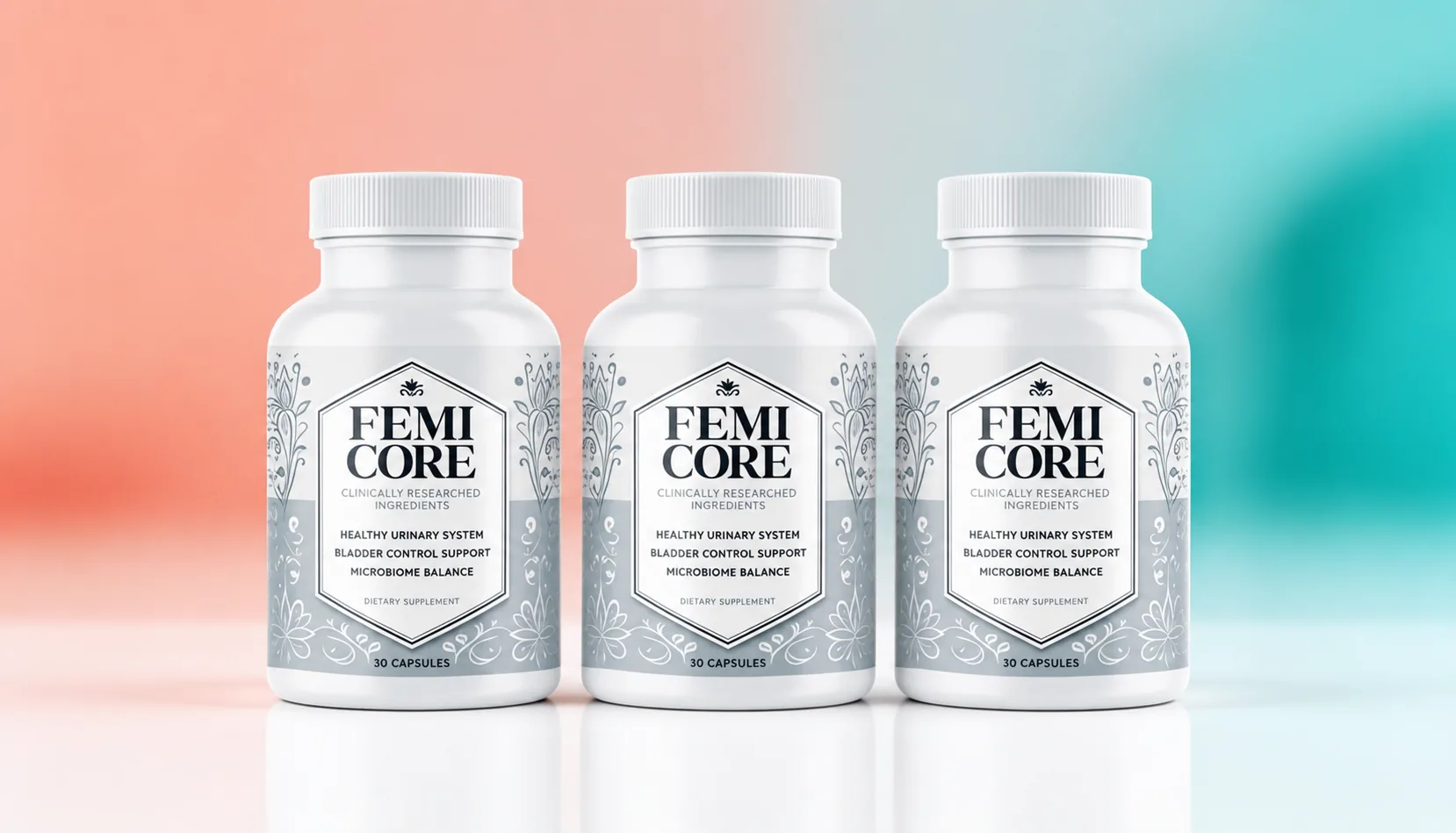
Price per bottle is a marketing number. The number that decides whether a supplement is expensive is cost per day, so here is every package converted, with shipping included where it applies. One capsule a day means one bottle lasts 30 days, which makes the arithmetic straightforward. Figures read from the official checkout on September 7, 2026.
| Package | Per bottle | Product total | Shipping | Supply | Real cost per day |
|---|---|---|---|---|---|
| 2 bottles (starter) | $79 | $158.00 | $9.99 | 60 days | $2.80 |
| 3 bottles (most popular) | $69 | $207.00 | Free | 90 days | $2.30 |
| 6 bottles (best value) | $49 | $294.00 | Free | 180 days | $1.63 |
Three things fall out of that table that the sales page will not point out. First, the starter pack is the only one that pays shipping, so the gap between the smallest and largest package is wider than the per-bottle prices suggest: $2.80 a day against $1.63, a difference of about 72%. Second, free shipping on the kits is genuinely free here, with no handling fee bolted on at checkout, which is not true of every brand in this category. Third: the 6-bottle package is 180 days of product against a 60-day refund window, so it is the best price once you already know FemiCore works for you, not the best first order.
On that arithmetic, the 3-bottle package is the sensible default. It costs $2.30 a day, ships free, and gives you 90 days of product, which is long enough to reach the 12-week mark where the cranberry research suggests an effect would show up, while still letting you decide inside the 60-day window whether to keep the rest. The starter pack makes sense only if you want the smallest possible bet, and the 6-bottle once you already know you respond. The discounted bundle prices are promotional and change without notice, so lock in the 3-bottle price while it is listed. See the 3-bottle price on the official site →
Exact prices change with the company’s promotions, so check the official page for today’s numbers. Whatever you do, buy from the official site only — more on why in the counterfeit section of our where to buy FemiCore guide.
The Money-Back Guarantee: Does FemiCore Offer Refunds?
The key fact: FemiCore comes with a 60-day money-back guarantee. Because the product is sold through ClickBank, refunds are generally straightforward to request. Paired with the 3-bottle package, it lets you use the full window to decide with real data.
Read the fine print before you buy: guarantees like this usually require you to request the refund within the window and may ask you to return bottles, even empty ones. Sixty days covers two bottles, just enough to see whether the second-bottle pattern other users describe holds true for you. If you are leaning toward the 3- or 6-bottle bundle, mark a date on your calendar inside those first 60 days to decide whether to keep going or ask for your money back.
It is worth saying clearly: the guarantee is genuinely what makes a FemiCore trial low-risk, and it is the strongest practical reason to consider it at all. A company confident enough to refund two months of use is at least standing behind the product. Just treat the guarantee as your decision deadline, not an afterthought.
Who FemiCore Is For, and Who Should Skip It
Bottom line on fit: FemiCore makes the most sense if your bladder symptoms include urgency, nighttime trips, repeat UTIs, or changes that started around menopause. It makes the least sense if your only issue is leaking when you cough or sneeze.
A good fit if you:
- Have a history of recurrent UTIs and want a daily, cranberry-and-probiotic support option
- Noticed more urgency or more nighttime trips as you moved through perimenopause or menopause
- Are doing, or willing to start, pelvic floor work and want to add microbiome support on top
- Prefer a once-daily capsule and value the 60-day guarantee as a safety net
- Want a gradual, daily support approach rather than a quick fix
You should probably skip it if you:
- Only leak when you cough, sneeze, or lift, with no urgency or infections; start with pelvic floor training
- Are pregnant or breastfeeding (the cranberry evidence specifically did not support use in pregnancy; check with your doctor)
- Have symptoms of an active UTI — burning, urgency, fever, or blood in urine. That needs a doctor and likely antibiotics, not a supplement
- Are on antibiotics or immunosuppressed without clearing it with your clinician first
If you are not sure which type of bladder problem you have, that is the first thing to sort out — our complete guide to bladder leaks walks through the differences so you do not spend money solving the wrong problem.
How to Trial FemiCore the Smart Way
A sensible plan: Give it a fair test inside the 60-day guarantee window, stack it with the habits that actually have strong evidence, and track your symptoms so you are judging results by data, not by hope.

Here is the part that separates a smart trial from a guess: FemiCore works best stacked with a few free habits that have strong evidence of their own, so you cover both the microbiome side and the muscle side at once. It is also worth ruling out a plain nutrient gap first: the vitamins linked to frequent urination are cheap to test and easy to overlook.
- Talk to your doctor first, especially if you have recurrent infections or take other medications.
- Plan for at least two bottles. The 3-bottle package is the simplest way to do it. Changes tend to show up into the second bottle, so judge it by the end of the 60-day guarantee, not after a week.
- Pair it with pelvic floor training. The “Knack” maneuver — tightening your pelvic floor right before you cough or sneeze — has striking trial data. In research by Miller and colleagues, the Knack reduced urine loss from a medium cough by about 98% immediately, and women leaked roughly 73% less on a deep cough within a single week of learning it. Training handles the muscle side; FemiCore is built to support the microbiome side. Together they cover more of the picture than either one alone.
- Mind the basics: steady hydration (cutting fluids backfires), and easing off known bladder irritants like caffeine. And if you carry extra weight, this one is powerful — in the PRIDE trial (NEJM, 2009), overweight women who lost about 8% of their body weight cut their weekly incontinence episodes by nearly half (47%).
- Keep a simple symptom log — leaks per day, nighttime trips, any UTI symptoms. After 60 days, the log, not your memory, tells you whether to keep going or request a refund.
For a full walkthrough of pelvic floor training, see our pelvic floor exercises for women over 40. Do that work regardless of whether you try FemiCore.
What This Review Does Not Know
Why this section exists: a review that only tells you what it knows is hiding half the picture. Here is what could not be verified from public sources, stated plainly so you can weigh it yourself.
- The exact doses. The label gives a 350 mg herbal blend total and a 50 mg probiotic weight, not the cranberry PAC amount or a CFU count, so neither can be checked against the trials.
- A trial of the finished formula. The research is on the individual ingredients; no published clinical trial has tested the FemiCore capsule itself.
- An independent lab test. No third-party assay of the capsule contents exists in the public record. That is normal for this category and is not an accusation.
None of these gaps is unique to FemiCore, and none of them is proof of a problem. They are the reason the transparency category scores 3.0, and the reason the right move is a tracked trial backed by the refund window, where your own results answer what the label does not. If any of these become verifiable, this page gets updated and the date at the bottom changes with it.
My Honest Verdict
If you are a woman over 40 whose bladder has changed, with more urgency, more nighttime trips, or UTIs that keep coming back, FemiCore is the formula I would trial first. It standardizes its cranberry to the compound with the best evidence, it names its probiotic strains where its closest lookalike stays vague, it is one capsule a day, and the 60-day guarantee means you can ask for your money back if it does not work for you.
Do it the smart way: order the 3-bottle package, keep a simple symptom log, keep up your pelvic floor work, and make your decision inside the 60-day window. The one case where I would not start here is if your only problem is leaking on a cough or sneeze; begin with pelvic floor training, and add FemiCore later if urgency or infections turn out to be part of the picture too.
— Ellen Bennett
Ready to start your 60-day trial?
3-bottle package · free shipping · 60-day money-back guarantee
Key Takeaways
- Best fit: women 40+ with urgency, nighttime trips, or repeat UTIs. Its lead ingredient has the strongest evidence: a 2023 Cochrane review found cranberry cut recurrent UTI risk by about 26% in women.
- The right probiotic strain. L. crispatus halved recurrent UTIs in a 2011 trial; that trial used vaginal delivery, so the oral capsule is the plausible, less-tested route.
- Plan on weeks, not days. Women who respond tend to notice it into the second bottle, which is why the 3-bottle package is the sensible first order.
- Pair it with pelvic floor work. The Knack maneuver cut leakage on a deep cough by about 73% in a week; training covers the muscle side, FemiCore the microbiome side.
- The 60-day guarantee makes the trial low-risk. Track your symptoms and decide inside the window.
- See a doctor for active UTI symptoms — pain, fever, or blood in urine is not a supplement situation.
Frequently Asked Questions
Does FemiCore actually stop bladder leaks?
It depends on the kind of leak. For leaks that come with urgency, frequent trips, and repeat infections, FemiCore’s microbiome formula is the relevant approach, and its cranberry has strong evidence for recurrent UTIs, although the finished formula itself has not been tested in a trial. For leaks that happen only when you cough, sneeze, or lift, pelvic floor training is the main fix.
Is FemiCore FDA approved?
No. Supplements are not approved by the FDA the way prescription drugs are. FemiCore is made in an FDA-registered, GMP-certified facility, but that refers to manufacturing standards, not to the FDA approving the product or its claims.
How long does FemiCore take to work?
Plan on weeks, not days. The most common user pattern is little change during the first bottle, with gradual effects, for those who respond — into the second. Give it the full 60-day guarantee window before deciding.
Are there side effects?
Most users do not report significant side effects, but cranberry and herbal ingredients can cause mild digestive upset in some people, and uva ursi is not recommended for long-term use. If you are pregnant, breastfeeding, or on medication, check with your doctor or pharmacist first.
Can I take FemiCore with antibiotics?
Talk to your doctor before combining them. Antibiotics can affect probiotic bacteria, and if you have an active infection that needs antibiotics, that should be treated properly, a supplement is not a substitute for treatment.
What is FemiCore used for?
FemiCore is a daily supplement marketed to support women’s urinary and bladder health by promoting a healthy urinary microbiome. Its ingredients have the strongest evidence for preventing recurrent UTIs, rather than for stopping stress-type bladder leaks.
Is FemiCore worth it?
For a woman over 40 with urgency, nighttime trips, or recurrent UTIs, yes, it is worth a tracked trial: the 3-bottle package costs about $2.30 a day, and the 60-day guarantee keeps the risk low. If your only issue is leaking on a cough or sneeze, start with pelvic floor training instead.
Is FemiCore a scam?
No, it is a real supplement from a real company, made in a GMP-certified facility, with a 60-day money-back guarantee processed by ClickBank. Some marketing language runs ahead of the evidence, which is why this review separates what is proven from what is plausible. Buy only from the official site to avoid counterfeits.
Where should I buy FemiCore?
Buy directly from the official FemiCore website. It is not sold in pharmacies or major retailers, and listings on third-party marketplaces carry a real risk of counterfeit or expired bottles. The official site is also where the 60-day guarantee applies.
Does FemiCore work for stress incontinence specifically?
Not in any meaningful, evidence-based way. Stress incontinence — leaking when you cough, sneeze, lift, or run — is a pelvic-floor problem rooted in muscle weakness, not a microbiome problem. FemiCore’s cranberry-and-probiotic formula targets urinary tract bacteria, a different mechanism entirely. If stress leakage is your primary complaint, pelvic floor training has far stronger evidence and should come first.
Can I take FemiCore with metformin or blood pressure medication?
Possibly — but check with your doctor first. Berberine, one of FemiCore’s ingredients, can lower blood sugar and shares a liver enzyme pathway (CYP3A4) with several common prescriptions, including metformin, certain blood pressure medications, and statins. This does not automatically make the combination dangerous, but a pharmacist review before you start is the right call, especially if your medication doses are already well-calibrated.
Does FemiCore replace pelvic floor exercises?
No — and any review that implies it does is misleading you. Pelvic floor training — including Kegels and the Knack technique — has substantially stronger evidence for reducing leakage than any supplement. In published research, the Knack reduced urine loss on a deep cough by roughly 73% within a single week. FemiCore targets the microbial environment of the urinary tract and works best as a complement to physical training, not a replacement for it.
Will the benefits last after I stop taking FemiCore?
Probably not — for either the cranberry or the probiotic component. Cranberry’s proanthocyanidins prevent bacterial adhesion while present in the urine but do not permanently alter the urinary tract; protection fades within weeks of stopping. Probiotic colonization similarly requires ongoing supplementation to sustain. Think of FemiCore as a daily maintenance product rather than a course with a lasting fix.
Is FemiCore suitable for women over 70?
Possibly, but with more caution. The 2023 Cochrane review found no clear benefit from cranberry products in elderly adults for UTI prevention — a different result than in younger women. The uva ursi component also warrants extra care for anyone on multiple medications, which is more common in this age group. Women over 70 should review the full ingredient list with their doctor or pharmacist before starting.

Ellen Bennett
Women’s Health Researcher. Compiles peer-reviewed evidence on bladder, urinary, and pelvic health — naming each study and source. About the author →
Research methodology. This is a desk review. It draws on the product’s published label, the company’s own public sales and checkout pages, the retailer’s written refund policy, and the peer-reviewed literature on each ingredient. Every study is named and dated in the text, and every source link was opened and checked on the verification date below. Prices and package terms were read directly at checkout, not copied from another review.
Scope of this review. No independent laboratory analysis of the capsule contents was performed for this article, and no claim is made about what the product will do for any individual reader. Results vary from person to person. The gaps in what could be verified are listed in full in what this review does not know.
Affiliate disclosure. Reverse Bladder Leaks earns a commission if you buy through the links on this page, at no additional cost to you. The manufacturer did not pay for this review, was not shown it before publication, and had no input into the score or its wording. The rating is calculated from the six published criteria above and does not change based on commission.
Medical disclaimer. This article is for information only and is not medical advice, diagnosis, or treatment. Dietary supplements are not intended to diagnose, treat, cure, or prevent any disease, and no supplement is a substitute for antibiotics during an active urinary tract infection. Talk to your doctor or pharmacist before starting anything new, particularly if you are pregnant, breastfeeding, immunosuppressed, or taking prescription medication. Pain, fever, or blood in your urine needs a clinician, not a capsule.
Last Reviewed: September 2026 — Last Updated: September 2026 — by Ellen Bennett, Women’s Health Researcher. Prices and package terms verified September 7, 2026 and can change without notice. Sources: Cochrane Database of Systematic Reviews (2023); Frontiers in Nutrition meta-analysis (2024); Clinical Infectious Diseases (2011); New England Journal of Medicine / PRIDE trial (2009); International Urogynecology Journal (Knack maneuver; estrogen and recurrent UTI, 2019); NIH/NIDDK; ACOG; Urology Care Foundation; Mayo Clinic.